EdbMails Demo / Trial Version
Step 1. Download and install EdbMails
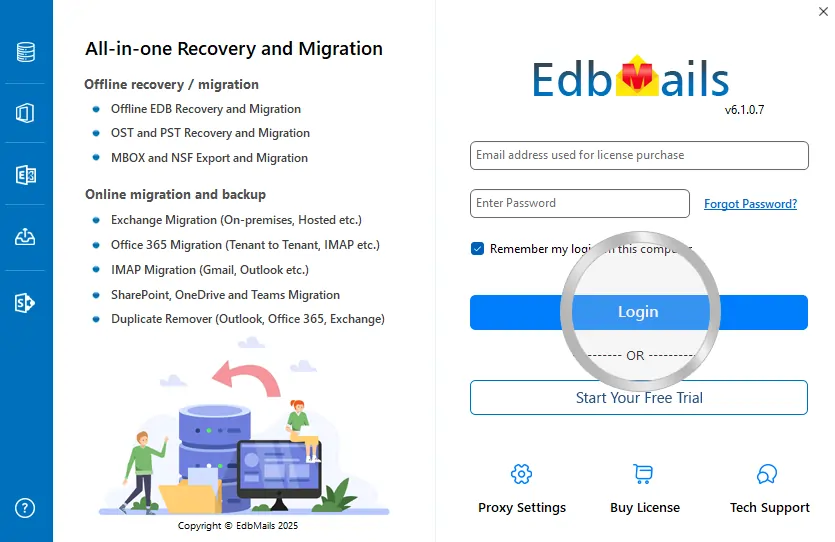
Step 2. Click the 'Start Your Free Trial' button
On , the conversation wasn't just about what was on TV, but how content was being reshaped by user interaction. We saw the rise of "modular content"—shows and music designed to be clipped, remixed, and shared, making the audience an active participant in a project's success. 2. AI and the Creative Frontier
We saw a massive trend of studios licensing their "prestige" content to competitors (e.g., HBO shows appearing on Netflix), signaling a more collaborative, albeit fragmented, ecosystem. 4. Gaming as the New Social Square defloration 24 02 15 olya zalupkina xxx xvidip
Content creators began using generative tools to bridge the gap between "indie" and "studio" quality. This date marked a period where the barrier to entry for high-fidelity visual storytelling began to vanish, allowing smaller creators to compete with major studios in the "popular media" space. 3. The Consolidation vs. Fragmentation War On , the conversation wasn't just about what
By this point in 2024, gaming was no longer a sub-sector of entertainment—it was the center of popular media. High-profile adaptations (like the success of The Last of Us and the anticipation for Fallout ) proved that gaming IPs were the most valuable assets in Hollywood. On Feb 15, the industry was buzzing with news of cross-platform integration, where movies, games, and social experiences existed in a single, continuous loop. 5. The "Authenticity" Premium AI and the Creative Frontier We saw a
EdbMails Demo / Trial Version
Step 1. Download and install EdbMails
Step 2. Click the 'Start Your Free Trial' button

Hi, May I help you?
Hide Chat Now